

The Off-Ramp That Doesn’t Exist
Last time yields hit this level, the administration could back down. Wars don’t have a pause button.

At the Economic Club of Miami on March 26, Federal Reserve Governor Stephen Miran laid out a case for shrinking the Fed’s balance sheet by $1 trillion to $2 trillion. The proposal would take years, he acknowledged, but the direction excited him. Conspicuously absent was any mention of the war that’s currently battering the Treasury market where those bonds would need to land.
That same day, the Treasury’s seven-year note auction priced at 4.255%, up from 3.79% just a month earlier, with the government forced to offer a higher rate than expected to find buyers. The ICE BofA MOVE index, which tracks expected volatility in Treasury bonds, closed at 115 after rising nearly 18% in a single session. And for the first time, fed funds futures crossed 50% probability that the Federal Reserve’s next move would be a rate hike, not a cut. Miran was describing a future in which the Fed shrinks its footprint in the Treasury market. The auction results suggested buyers cannot absorb what is already there.
Three weeks ago, The New Record argued that Treasury Secretary Scott Bessent’s 3-3-3 framework was built on an energy assumption the war destroyed. Since then, the bond market has priced that destruction with increasing urgency, and nobody in the administration has adjusted a syllable. Bessent told NBC on March 22 that the government has “plenty of money” to fund the war, and when asked on Sky News whether any price tag could make it unaffordable, he answered “absolutely not.” What he has not addressed is the price the bond market is charging for each new dollar of debt.
The optimistic read holds that this stress is temporary. James Carter, co-head of fixed income at W1M, told the Financial Times that the decline in market depth was a natural response to an exogenous shock, historically short-lived. Miran himself said the idea needs to be “studied and calibrated.” Governor Christopher Waller, his colleague on the Fed board, has put the realistic figure at $600 billion—less than a third of Miran’s upper estimate. The Fed has not agreed on a number, let alone a plan.
The comparison that reassures is liberation day: in April 2025, tariff chaos sent the ten-year yield to 4.59%, and then the administration paused the tariffs and everything normalized. Stress came, stress went.
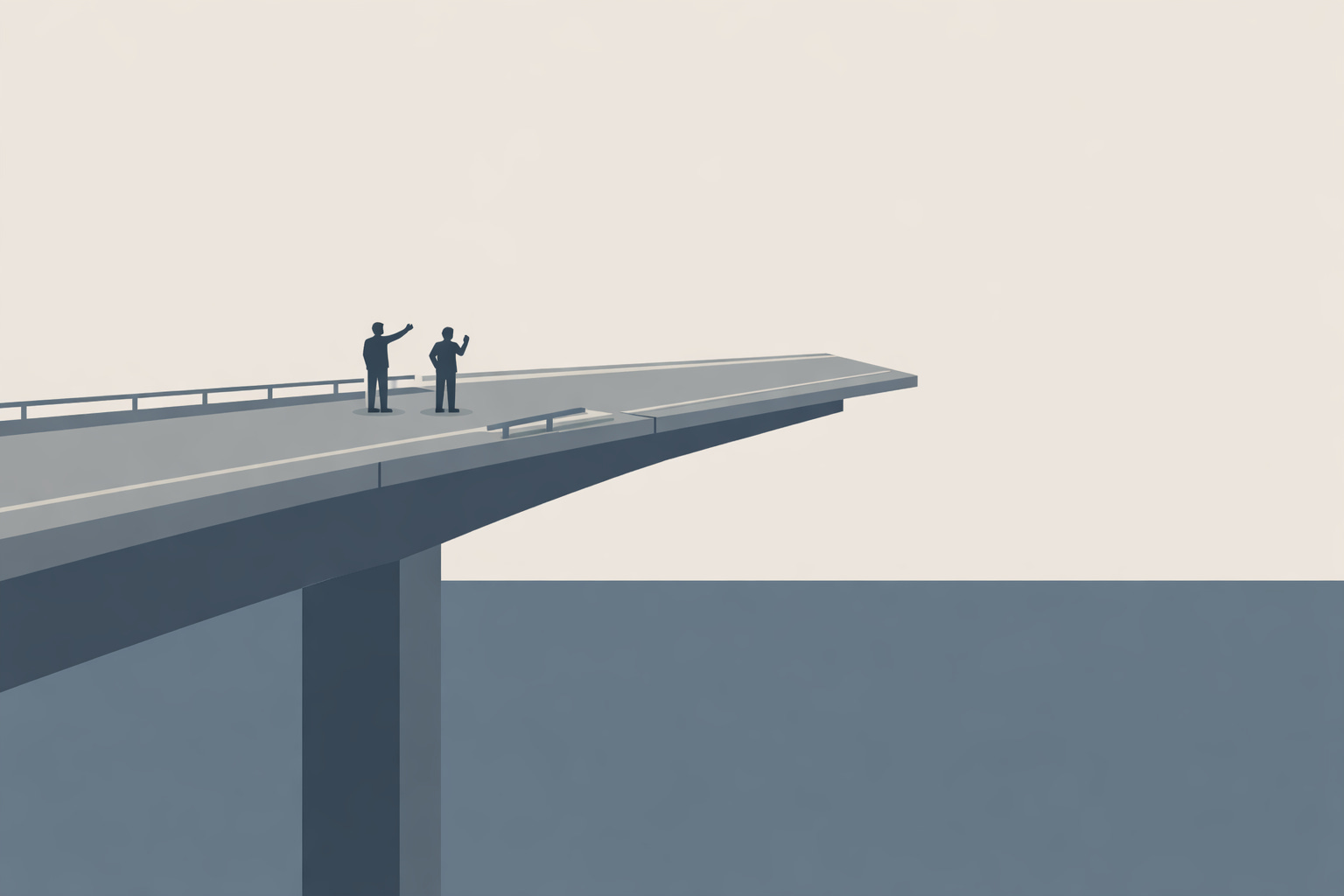
But a tariff is a policy choice reversible with a social media post. A war is not. That comparison should worry people more than it comforts them.
The speed at which rate expectations have moved tells the story most efficiently. Before the conflict, futures priced roughly two quarter-point cuts in 2026. Governor Waller captured the reversal in a noteworthy confession on March 20: he had been preparing to dissent in favor of a cut, he said, until the Strait of Hormuz closure made clear that oil prices would stay elevated. This sentiment shows up in the data too—within three weeks, the median expectation swung from 50 basis points of easing to a coin flip on a hike. Seven of 19 FOMC members penciled in zero rate cuts for 2026, up from four in December. Chicago Fed President Austan Goolsbee warned against “a repeat of the team-transitory mistake.”
Those shifting expectations show up in a very tangible place: the government’s ability to borrow. When the government borrows, it sells bonds at auction, and the results show how willing investors are to lend. On February 24, before the war, the Treasury sold $69 billion in two-year notes to strong demand: the yield came in a tenth of a basis point above expectations, and primary dealers, the large banks required to buy whatever investors won’t, absorbed less than 10% of the offering.
One month later, the Treasury held the same auction at the same size. Direct bidders, the category covering domestic pensions and asset managers, showed up at roughly half their six-month average. Dealers absorbed 24%, the highest share since October 2022. The five-year sale the next day drew its worst bid-to-cover ratio in four years. Bloomberg called it the worst three-auction week since May 2024.
Overseas buyers held their ground. Indirect bidders, the auction category that captures foreign demand, came in near their average. It was American institutions that stepped back.
Miran’s record makes the gap between his speech and the data harder to dismiss as bad timing. He is the architect of the Mar-a-Lago Accord, a much-maligned proposal for restructuring the global financial system by getting foreign Treasury holders to fund American defense spending through coerced purchases of century bonds. Larry Summers called his first major speech as Fed governor the analytically weakest he could recall from anyone in the role. JPMorgan’s chief United States economist, Michael Feroli, found his arguments “questionable, incomplete and almost none persuasive.”
As Council of Economic Advisers chair in April 2025, Miran met representatives from Citadel, Balyasny, Tudor Investment Corp., BlackRock and PGIM at the Eisenhower Executive Office Building after the liberation day tariff shock. Attendees described him to the Financial Times as “incoherent” and “out of his depth.” He joined the Fed board on a 48-47 vote. The person proposing that the Fed push $1 trillion to $2 trillion in additional bonds onto the private sector is someone the bond market’s most sophisticated participants have already weighed and found wanting.
Both officials have been prolific in public since the war began. Neither has mentioned what the government is paying to borrow. Bessent cannot acknowledge the cost without conceding that the war carries a price the administration didn’t budget for. Miran cannot acknowledge it without admitting his balance sheet proposals depend on a market the war already destroyed.
The Pentagon has requested $200 billion in supplemental funding. Total federal debt crossed $39 trillion in March. Bessent himself warned in 2024 that high deficits “create a national defense problem” because they leave the Treasury with no room to expand borrowing when a crisis arrives. He is living inside the crisis he described.
The ten-year yield closed March 27 at 4.456%. On April 11, 2025, it hit 4.59%, and the administration reversed the tariffs driving it higher. That threshold is approaching again. Last time, there was a lever to pull. This time, the off-ramp doesn’t exist. Every basis point higher is the market asking a question the administration refuses to answer.